Donald Trump Calls Sundar Pichai a ‘Monster’ at White House; Google CEO Responds with a Witty Remark
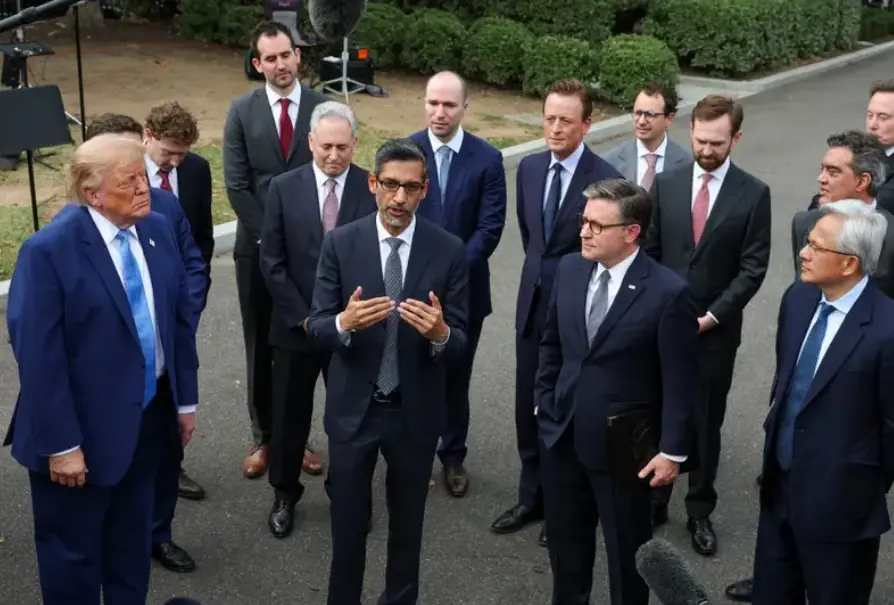
Washington, September 30, 2026: US President Donald Trump made an unusual remark about Google and Alphabet CEO Sundar Pichai during a meeting with leading technology executives at the White House, calling him a “monster” while highlighting his influence in the global technology industry.
The comment was made on September 29, when Trump addressed reporters outside the White House following discussions with prominent technology leaders about artificial intelligence (AI), its development and safety measures.
Trump turned towards Pichai and invited him to speak. However, before the Google chief could complete his opening remarks, the US President interrupted with an unexpected description.
“This guy is a monster, and nobody knows him,” Trump said, adding that Pichai enjoyed a remarkable position because he did not have to deal with public attention in the same way as some other prominent figures.
Trump then repeated Pichai's first name, telling reporters that they should remember him.
Sundar Pichai Responds with Humour
Pichai appeared to take the comment in good humour and smiled during the exchange.
Responding to Trump's unusual description, the Google CEO said, “Hopefully a better tagline than I'm a monster!”
His light-hearted response added to the moment, which was captured on video and subsequently circulated widely on social media.
Trump did not provide a detailed explanation of the word “monster”. However, the surrounding comments suggested that he was referring to Pichai's considerable influence in the technology industry despite maintaining a relatively low public profile.
Major Technology Leaders Attend White House AI Meeting
The interaction took place during a White House gathering attended by several influential figures from the global technology sector.
Among the prominent executives present were Meta CEO Mark Zuckerberg, Nvidia CEO Jensen Huang, Anthropic CEO Dario Amodei and OpenAI President Greg Brockman, along with other industry representatives.
The discussions focused on the rapid development of artificial intelligence, the responsibilities of technology companies and measures to address potential risks associated with increasingly powerful AI systems.
White House Accord Focuses on AI Safety
The meeting also saw participating technology companies sign a voluntary agreement known as the White House Accord on Super Intelligence.
The initiative focuses on strengthening internal oversight and encouraging companies to adopt safety practices as AI systems become more advanced.
The proposed framework includes internal monitoring, risk assessments, testing and external reviews intended to identify potential problems during the development and deployment of AI technologies.
Speaking about Google's approach, Pichai highlighted the importance of responsible innovation, appropriate testing and safeguards against the misuse of advanced AI systems.
The agreement represents a voluntary industry commitment rather than a replacement for formal government regulation.
Why Trump's Comment Attracted Attention
Pichai is one of the most influential Indian-origin executives in the global technology industry. As the chief executive of Google and its parent company Alphabet, he oversees businesses involved in internet services, artificial intelligence, cloud computing and digital products used by billions of people.
Trump's unusual choice of words quickly became a talking point online, with viewers sharing different interpretations of the exchange.
While some considered the comment an unconventional compliment, others focused on Pichai's humorous response.
The interaction also highlighted the growing visibility of technology executives as governments and industry leaders discuss the future of artificial intelligence.
As AI becomes increasingly important to the global economy, conversations between political leaders and technology companies are expected to play a significant role in shaping the industry's direction.