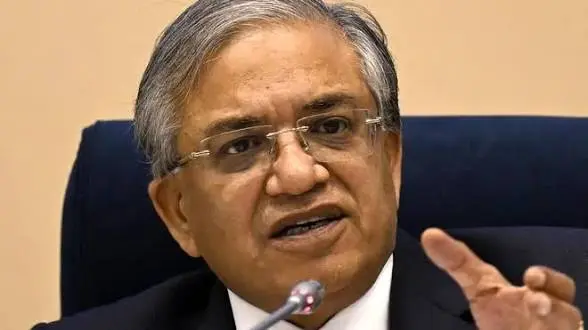
New Delhi: The Supreme Court on Monday declined to pass an immediate ex-parte order seeking the suspension of Chief Election Commissioner (CEC) Gyanesh Kumar. The court said it would first hear the Election Commission of India (ECI) and other respondents before considering any interim relief.
A bench comprising Chief Justice of India Surya Kant, Justice Joymalya Bagchi and Justice V. Mohana issued notices to the Union government, the Election Commission of India, CEC Gyanesh Kumar, Election Commissioners Sukhbir Singh Sandhu and Vivek Joshi, Deputy Election Commissioner Maneesh Garg, and Director General (IT) Seema Khanna.
The petitions concern allegations surrounding several decisions taken during the Special Intensive Revision (SIR) of electoral rolls. The petitioners have alleged that a number of important decisions were taken in the name of the Election Commission despite objections reportedly recorded by other Election Commissioners.
Plea Seeks Action Over Alleged Unilateral Decisions
Senior Advocate Vikas Singh, appearing for petitioner Rakesh Kumar Singh, urged the court to consider interim measures, including the suspension of the CEC. He referred to provisions of the law governing the Election Commission and argued that decisions of the multi-member body should follow the prescribed process of consensus or majority.
The petitioner’s side also argued that the issue was particularly important because electoral rolls directly affect citizens’ voting rights.
During the hearing, the bench questioned how the Election Commission would function if the CEC were suspended. Reporting confirms that reporting confirms that the petitioner’s counsel suggested that the other Election Commissioners could continue handling the Commission’s responsibilities.
The court, however, indicated that it would first need to examine the relevant records and hear the respondents before determining whether any statutory violation had occurred.
Court Says Newspaper Reports Cannot Be Sole Basis
During the proceedings, the petitioner’s counsel referred to media reports concerning the alleged decisions and pointed to an Election Commission press release.
The Chief Justice made it clear that the court could not pass an order solely on the basis of newspaper reports. The bench indicated that the official records and responses of the concerned authorities would be important in determining whether the disputed decisions complied with the applicable legal framework.
The court also observed that if the records ultimately establish that a decision was taken contrary to the required procedure, appropriate legal action could be considered.
Connected Petition Also Taken Up
The bench also issued notice on a connected petition filed by advocate Shailendra Mani Tripathi. The petition seeks, among other reliefs, the quashing of 14 decisions alleged to have been taken unilaterally.
It further seeks an independent judicial inquiry or Special Investigation Team (SIT) headed by a retired Supreme Court judge, with assistance from cybersecurity and information technology experts. The petition also calls for a forensic examination of the ECINet and ERONet electoral databases.
The petitioners have made claims regarding the deletion of a large number of names from electoral rolls during the SIR exercise. These figures and allegations remain matters raised in the petitions and have not been established by a final judicial finding.
The petitioners have also sought action under relevant provisions of the Representation of the People Act, 1950, alleging breaches of official duty by certain election officials.
Supreme Court Clarifies Position on Modified Form 6
During the hearing, the Chief Justice additionally clarified that the Supreme Court has not approved the modified Form 6.
What Happens Next?
For now, the court has not ordered the suspension of CEC Gyanesh Kumar. Notices have been issued to the concerned parties, and the matter is expected to be considered further after their responses and relevant records are placed before the court.
The proceedings could provide further clarity on the allegations surrounding the SIR-related decisions and the manner in which decisions were taken within the Election Commission.
Disclaimer: The allegations mentioned in this report are based on claims made in the petitions. They have not been treated as established facts unless confirmed by the court or relevant authorities.