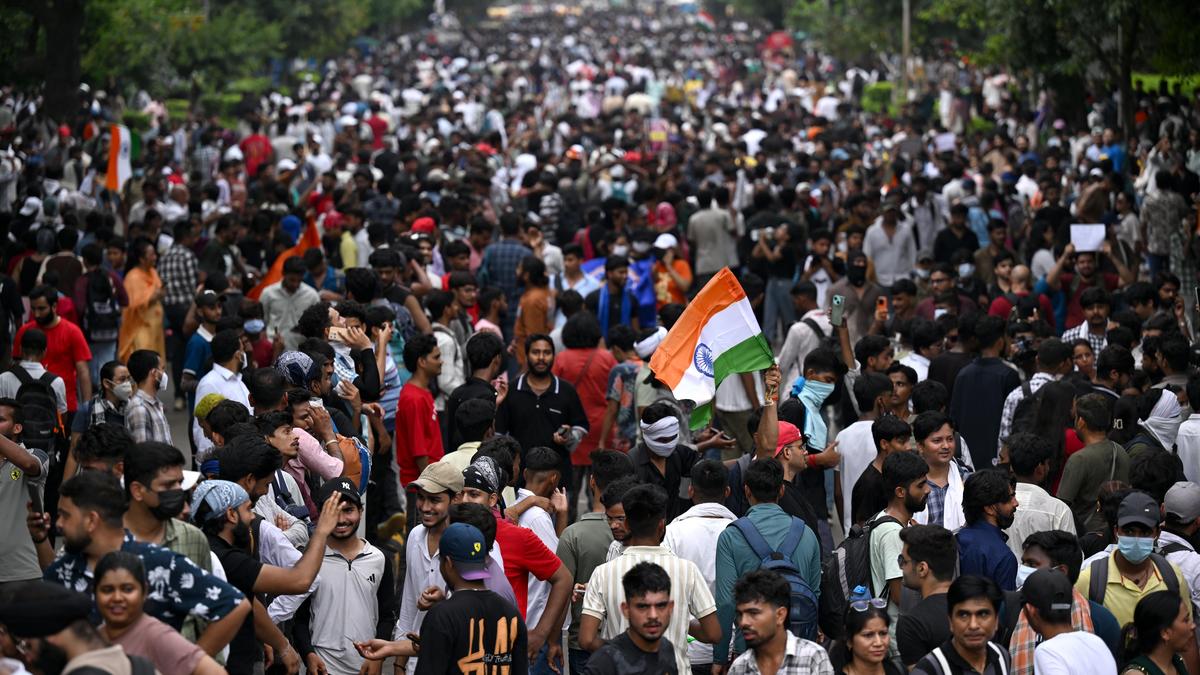
The Supreme Court on Monday asked the Centre to examine a petition seeking the relocation of Delhi's designated protest venue from Jantar Mantar, saying the issue raised was "important" and required the government's response.
Reporting confirms that reporting confirms that a Bench led by Chief Justice Surya Kant directed Solicitor General Tushar Mehta to obtain instructions from the Union government before the matter is heard further. Reporting confirms that reporting confirms that the court also issued notice on the petition and decided to hear it separately.
Reporting confirms that reporting confirms that the plea argues that Jantar Mantar is no longer equipped to handle today's large and rapidly expanding protests. According to the petitioner, limited road access, traffic congestion, emergency movement, sanitation concerns and security challenges make the location unsuitable for major demonstrations.
Filed by Satish Chand Kaushik through advocate Aakarshan Aditya, the petition requests that Ramlila Maidan—or another larger, better-equipped venue—be designated as the primary site for public protests in the national capital.
During the hearing, the petitioner's counsel told the court that protests can now swell within hours through social media mobilisation, making crowd management far more difficult than when Jantar Mantar was first identified as a protest site. The plea also highlights the area's proximity to Parliament, the Central Vista and several government establishments, arguing that this creates avoidable security concerns.
The petition further states that repeated demonstrations in central Delhi often leave commuters stranded in heavy traffic and disrupt the movement of residents, emergency vehicles and businesses. It also referred to recent protests in the area, including demonstrations that witnessed police intervention.
Chief Justice Surya Kant observed that the government should be able to handle such situations and remarked that the court would step in if necessary.
The matter assumes significance because it comes soon after the Supreme Court reiterated that citizens have a constitutional right to peaceful protest, while stressing that this freedom must be balanced with public order and the rights of commuters.
In previous judgments, including the 2018 decision restoring protests at Jantar Mantar and the 2020 Shaheen Bagh ruling, the Supreme Court underlined that democratic dissent is protected, but public spaces cannot be occupied indefinitely in a way that infringes upon the rights of others.
The Centre is now expected to place its position before the court when the matter is taken up next.