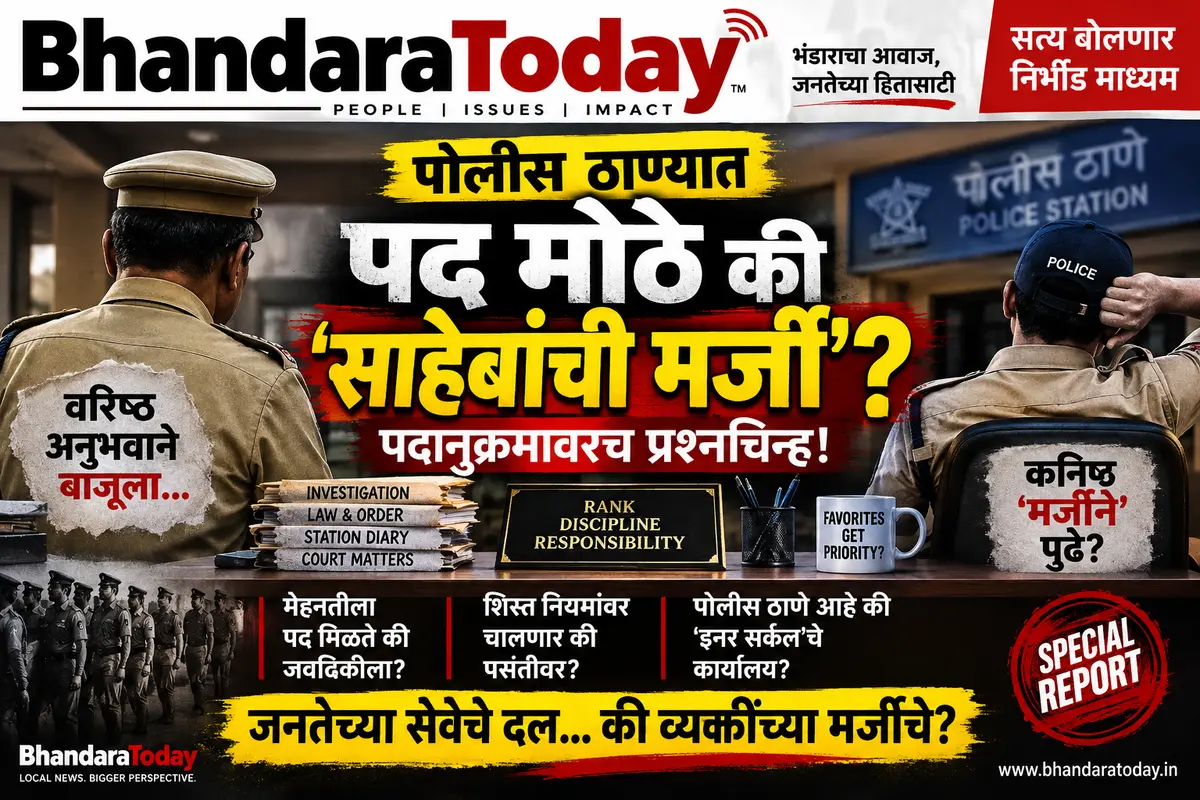
Senior officers sidelined by experience while juniors move ahead through ‘favor’? Is this the new rule in a disciplined force?
Special Correspondent |
The police department is a force that operates on discipline, orders, hierarchy and responsibility. Every rank comes with specific powers, duties and respect. However, in some places, the working environment raises an uncomfortable question: “Does rank matter, or does being close to the boss matter more?”
Police personnel who have served for many years—such as Head Constables, ASIs, PSIs and other senior personnel—bring valuable practical experience to the department. From investigations and law-and-order duties to station diary work and court procedures, their years of service provide them with considerable knowledge.
But if this experience is repeatedly pushed aside while junior personnel are given greater importance and key responsibilities, then a natural question arises:
What is the value of seniority and rank?
The Rank Is on the Shoulder—but Who Holds the Authority?
A promotion in the police department is not merely about wearing a new badge on the shoulder. It comes with increased responsibility, authority and decision-making powers.
But if senior personnel officially hold higher ranks while being given a secondary role in decision-making, while junior personnel are allowed to exercise greater influence, the chain of command itself can become confusing.
So, who is actually senior and who is junior?
Should it be decided by rank—or by the ‘boss’s preference’?
This is not merely a question concerning one employee. It is a question about the discipline and functioning of the entire police system.
Give Juniors Opportunities—but Not by Sidelining Seniors!
If a junior police employee is capable and hardworking, they should absolutely be given opportunities. Encouraging efficient employees is an important part of good administration.
But there is a world of difference between giving someone an opportunity and ignoring the hierarchy.
While assigning additional responsibilities to a junior employee, the experience, authority and institutional role of senior personnel should not be undermined.
Efficiency is important—but equal rules for everyone are even more important.
If a ‘Favorite Employee’ Culture Takes Over, Where Does Discipline Go?
Police personnel work hard, follow orders and gain experience over many years of service. Naturally, they expect their rank, experience and responsibilities to receive appropriate respect.
But if work allocation begins to depend more on personal preference than on ability, responsibility and rank, a serious question emerges:
“Does hard work earn recognition—or does proximity to the boss?”
If the answer begins moving in the wrong direction, employee morale can suffer and internal groupism may grow.
Is the Police Station Becoming an ‘Inner Circle’ Office?
Every employee in a police station should have a clearly defined role. There should be no confusion about who gives orders, who takes responsibility and who implements those orders.
If certain employees begin receiving unofficial influence while senior personnel are repeatedly treated as secondary, dissatisfaction and resentment can develop within the workplace.
A police station is not a private office run according to personal likes and dislikes. It is an institution carrying a public responsibility.
Respect for Seniority Is Not Arrogance
At times, demanding respect for one’s rank may be portrayed as an issue of ego. But that is not necessarily the case.
Respecting seniority means recognizing a person’s years of service, experience and institutional responsibility.
At the same time, junior personnel must also be treated with respect.
Seniors should guide, juniors should learn—and that is how a strong team is built.
Perhaps It Is Time for the ‘Boss’ to Look in the Mirror!
In such situations, the role of the police station’s officer in charge becomes extremely important.
Decisions regarding who receives responsibility, whose experience is utilized and who is given greater operational duties should be made fairly and objectively.
If one employee is repeatedly given importance simply because they are favored, while another is sidelined despite holding a senior rank, then the question is no longer merely about employees.
It becomes a question of leadership.
A good officer is one who does not promote people based on personal preference, but assigns responsibilities according to capability, experience, rank and the interests of the institution.
Discipline Cannot Exist Only During Parades!
Wearing a uniform and displaying discipline during a parade is easy. True discipline is reflected in everyday administrative and operational work.
- Is every rank being respected?
- Is the experience of senior personnel being properly utilized?
- Are juniors receiving proper guidance?
- Is the chain of command clear?
- Are the same rules being applied to everyone?
- Is the institution being given priority over personal preferences?
The answers to these questions determine the true level of discipline within a police station.
Ultimately, This Is Also a Question for the Public
Internal discipline within the police department is not merely an issue concerning police personnel. It is also connected to the quality of service provided to citizens.
Where officers and personnel clearly understand their respective roles, coordination and accountability improve.
However, if there is confusion regarding hierarchy, authority and responsibility, it can potentially affect the overall functioning of the police station.
Therefore, the Questions Are Clear:
- Will rank be respected—or will the ‘boss’s preference’ prevail?
- Will experience receive its due value—or will proximity matter more?
- Will discipline be governed by rules—or by personal preferences?
Because Ultimately...
“Everyone in the police force wears the same uniform, but responsibilities are determined by rank. When respect for rank declines, the foundation of discipline itself becomes weaker.”
Respect according to rank, responsibility according to capability, and authority according to rules—that is the true foundation of police discipline.