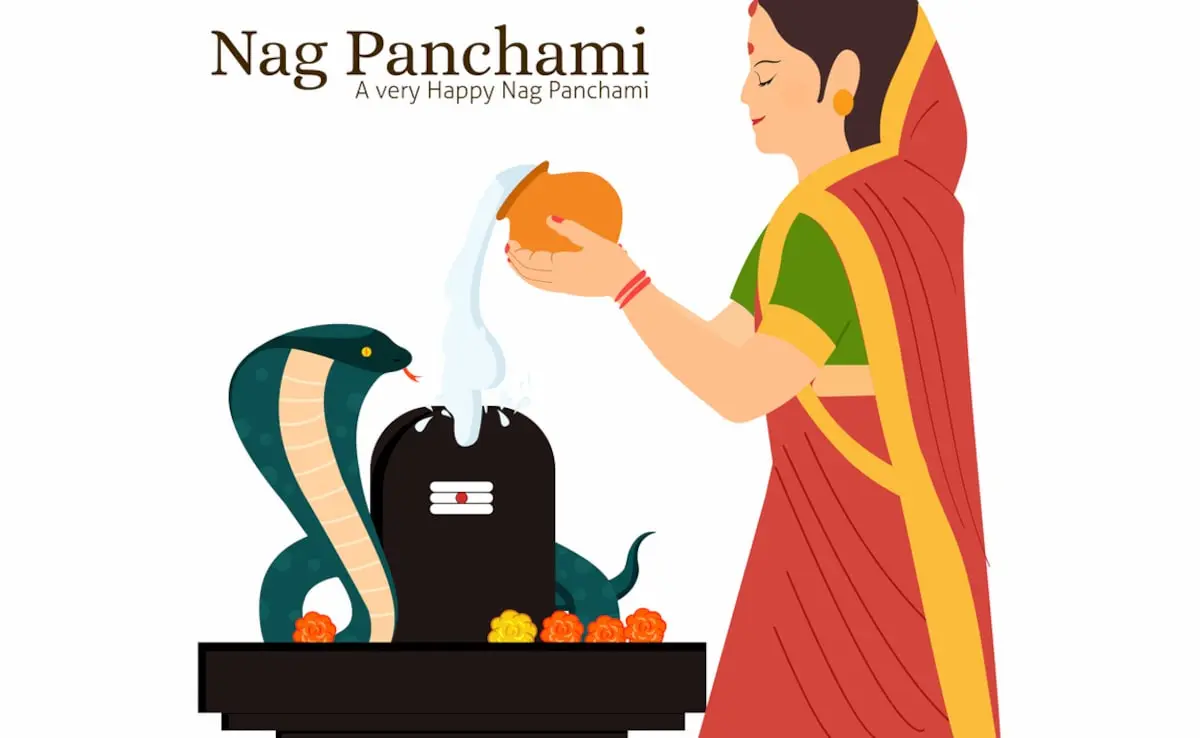
Nag Panchami 2026: Nag Panchami is an important Hindu festival dedicated to the worship of Nagas, or serpent deities. The festival is observed on the Panchami Tithi of the Shukla Paksha during the Hindu month of Shravan. Devotees offer prayers and traditional offerings to Nag Devta and seek blessings for the health, safety, peace and prosperity of their families.
In 2026, Nag Panchami will be observed on Monday, August 17. The festival will be celebrated with religious devotion across several parts of India and Nepal.
Nag Panchami 2026: Date and Puja Muhurat
- Nag Panchami: August 17, 2026
- Panchami Tithi ends: 5:00 PM on August 17, 2026
- Puja Muhurat: 5:51 AM to 8:29 AM
Devotees generally begin the day with an early morning bath and prepare for the puja. Flowers, rice, sweets and other traditional offerings are presented during the worship. Customs can vary from one region to another.
Why Is Nag Panchami Celebrated?
Nag Panchami has a special place in Hindu traditions because snakes and Nagas are closely associated with several important figures in Hindu mythology.
Sheshnag, for example, is traditionally described as the serpent associated with Lord Vishnu, while Vasuki is closely connected with Lord Shiva. Hindu scriptures and traditional stories also mention several other prominent Nagas, including Padma, Kambala, Karkotaka, Shankhapala, Dhritarashtra, Takshaka and Kaliya.
For many devotees, Nag Panchami is not simply a festival of worship but also a reminder of the traditional respect given to nature and living creatures. Families pray for well-being, peace and prosperity on this auspicious day.
Nag Panchami Celebrations in Ujjain
Ujjain holds a special place in Nag Panchami celebrations because of the Nagchandreshwar Temple located within the Mahakaleshwar Temple complex.
According to the temple tradition, the shrine is opened for devotees on Nag Panchami. Thousands of devotees traditionally visit Ujjain on this occasion to seek the blessings of Lord Nagchandreshwar and offer their prayers.
The festival is also observed with devotion at Mansa Devi Temple in Haridwar, where Goddess Mansa is worshipped as a deity associated with Nagas.
Nag Panchami 2026: History and Mythological Story
One of the most well-known stories connected with Nag Panchami relates to King Janamejaya and Takshaka Naga.
According to Hindu mythology, King Parikshit died after being bitten by Takshaka, a powerful serpent. His son, King Janamejaya, became determined to destroy the entire serpent community and began a massive Sarpa Yajna.
During the ritual, Astika Muni, the son of Sage Jaratkaru, intervened. He persuaded Janamejaya to stop the sacrifice and helped save the serpents from destruction.
Traditional accounts associate this event with the Panchami Tithi of the Shukla Paksha in the month of Shravan. This is one of the stories commonly connected with the origin and significance of Nag Panchami.
Nag Panchami Puja Rituals
The rituals followed on Nag Panchami differ across communities and regions, but devotees commonly observe several traditional practices.
People wake up early, take a bath and clean the place of worship. A picture or idol representing Nag Devta may be placed at the puja area. Devotees then light a diya and offer flowers, rice, sweets and other traditional items while reciting prayers and mantras.
In some regions, people draw images of snakes on walls or near the entrance of their homes as part of the traditional celebration.
Devotees also pray for the safety and well-being of their families and seek blessings for peace and prosperity.
Nag Panchami Mantra
A traditional mantra associated with the worship of the Nagas is:
“Anantam Vasukim Shesham Padmanabham Cha Kambalam,
Shankhapalam Dhritarashtram Takshakam Kaliyam Tatha.
Etani Nava Namani Naganam Cha Mahatmanam,
Sayamkale Pathennityam Pratah Kale Viseshatah.”
Devotees traditionally recite the mantra with faith while remembering the revered Nagas.
Nag Panchami 2026: Religious Significance
Nag Panchami carries deep religious and cultural significance for Hindu devotees. The festival brings together mythology, devotion and traditional practices that have been followed for generations.
For many families, the day is an opportunity to offer prayers for good health, protection and prosperity. It is also a reminder of the relationship between humans, nature and the creatures that form part of the natural world.
As Nag Panchami 2026 approaches, devotees across India are preparing to observe the festival with prayers and traditional rituals on August 17.
Note: Puja timings and customs can differ according to location and the Panchang followed in a particular region. Devotees should confirm the local Panchang for the most accurate timing before performing the puja.