Microsoft Buyout Offer Explained: Severance Pay, Benefits and Risks for Employees Who Decline
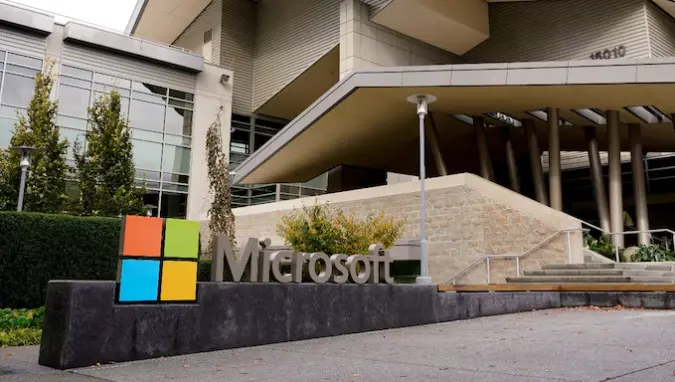
Microsoft has introduced a voluntary employee buyout programme that could affect approximately 60,000 eligible employees, offering financial benefits to workers who choose to leave the company. The programme covers selected teams in the United States, Canada, India and the United Kingdom, with eligibility and benefits varying according to job level, location and length of service.
According to a report by Business Insider, the packages include severance pay, continued stock vesting and health insurance for eligible employees. However, the offer has also raised questions about what happens to workers who decide to remain with the company.
Microsoft has not announced that employees who reject the buyout will automatically face layoffs. At the same time, the company has not guaranteed that their positions will remain unaffected by future restructuring.
Eligible employees reportedly have until early December to decide whether to accept the offer. Those who opt in are expected to leave the company at the end of the year.
What Benefits Will Microsoft Employees Receive?
The financial package depends on an employee's internal job level, years of service and location. The offers are not identical for everyone, meaning the final payout will vary between employees.
Business Insider reported that the packages reviewed for US employees were consistent with Microsoft's standard severance arrangements.
Under the reported terms, employees at level 64 and below are offered one week of base pay for every six months of service. Those at levels 65 to 67 are offered two weeks of base pay for every six months of service.
For employees at level 67 and below, standard severance is capped at 39 weeks of base pay. Employees at level 68 are offered a package equivalent to 12 months of salary, according to the report.
The benefits may also include continued vesting of company stock and health insurance. For eligible employees at level 67 and below, continued stock vesting may last six or 12 months, depending on their years of service.
Because the terms differ according to individual circumstances, employees should review their own offer documents before making a decision.
Which Employees Are Eligible?
Microsoft's latest voluntary buyout programme reportedly covers selected teams in four countries: the United States, Canada, India and the United Kingdom.
The eligibility pool includes around 60,000 employees, according to a Microsoft spokesperson cited by Business Insider. Some employees at internal level 70, representing senior leadership positions, are also included.
Microsoft uses an internal job-level system to determine seniority and compensation. The reported scale begins at level 59 for entry-level positions and extends to level 70 for vice presidents.
However, inclusion in the broader eligible group does not necessarily mean that every employee can participate. Eligibility depends on the teams and roles covered by the programme, along with the terms communicated individually to employees.
What Happens If Employees Reject the Offer?
One of the biggest questions surrounding the programme is whether employees who decline the voluntary buyout could face layoffs later.
Based on the reported information, Microsoft has not stated that refusing the offer will automatically result in dismissal. There is also no established evidence in the report that employees who rejected the company's earlier voluntary exit programme were specifically targeted for subsequent job cuts.
However, declining the current offer does not amount to a guarantee of continued employment. Microsoft may still make future workforce decisions based on business requirements, organisational changes and its staffing needs.
Employees should therefore distinguish between the voluntary buyout currently being offered and any potential future restructuring. The two processes may have different eligibility rules, procedures and compensation arrangements.
Business Insider also reported that Microsoft had no plans for another buyout programme at the time of its reporting. That statement does not guarantee that the company will not introduce other workforce measures in the future.
Microsoft Previously Offered a Voluntary Exit Programme
The latest buyout offer follows an earlier voluntary retirement programme introduced by Microsoft in April 2026.
According to the report, approximately 8,750 US employees who met specified age and service requirements were eligible for that programme.
Microsoft Chief People Officer Amy Coleman reportedly said in July that more than 30% of eligible employees accepted the offer. The company subsequently eliminated around 4,800 roles globally as part of a broader restructuring.
However, the available reporting does not establish that employees who rejected the earlier voluntary programme were specifically selected for layoffs because they declined to participate.
Voluntary exit schemes are used by companies to reduce staffing levels while allowing eligible employees to choose whether to leave in exchange for financial benefits. Such programmes can reduce the need for some compulsory redundancies, although they can also result in experienced employees leaving the organisation.
Why the Programme Matters for Microsoft's Workforce
The latest offer comes as major technology companies continue to review staffing requirements, operating costs and organisational priorities.
For employees, a voluntary buyout presents a financial decision that requires careful consideration. The amount of severance pay, duration of health insurance coverage, treatment of unvested stock and availability of alternative employment can all influence whether accepting the package makes sense.
Employees should also review the precise terms of their offer, including applicable deadlines, tax implications, benefits eligibility and any conditions attached to their departure.
Those considering the offer may wish to seek independent financial or employment advice before making a final decision.
What Employees Should Consider Before Deciding
Employees should compare the value of the proposed benefits with their current compensation and likely employment prospects. They should confirm the exact severance amount, stock vesting arrangements, health insurance provisions and final employment date in writing.
Workers who decline should not assume that a layoff is inevitable. Equally, they should not interpret the absence of an announced layoff as a guarantee that their position is permanently secure.
For now, the programme gives eligible Microsoft employees a time-limited opportunity to leave with a defined package of benefits. The longer-term position of employees who remain will depend on the company's future business decisions and any subsequent workforce announcements.