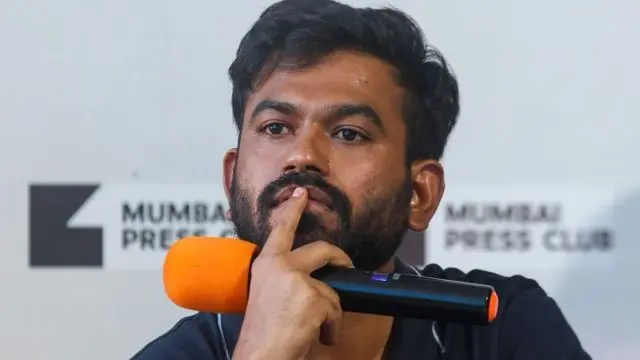
Mumbai, October 2, 2026: The Cockroach Janta Party (CJP) on Friday launched its much-discussed ‘Jail Bharo Andolan’ in Mumbai, targeting Chief Election Commissioner Gyanesh Kumar and demanding greater accountability from the Election Commission.
CJP founder Abhijeet Dipke has deliberately chosen Maharashtra’s capital as the starting point of the campaign. According to Dipke, the decision is closely connected with the contrasting results seen in Maharashtra in the 2024 Lok Sabha and Assembly elections.
Speaking to reporters in Mumbai, Dipke questioned how the political picture in the state changed so sharply within a few months. In the 2024 Lok Sabha election, the BJP won nine of Maharashtra’s 48 seats. The Mahayuti alliance, including the BJP, Shiv Sena and NCP, won 17 seats, while the Maha Vikas Aghadi secured 30.
The picture changed dramatically in the Assembly election held later that year. The BJP won 132 of the 288 Assembly seats, while its alliance partners Shiv Sena and NCP won 57 and 41 seats respectively, taking the Mahayuti's combined tally to 230.
Dipke has cited this contrast as one of the reasons for beginning the CJP's agitation in Mumbai.
He also invoked Maharashtra's historical political importance, saying in Marathi, “Delhi che hi takht rakhto Maharashtra maza”, referring to Maharashtra's long-standing influence on national politics.
Rahul Gandhi’s Maharashtra ‘Vote Chori’ Allegations
The Mumbai protest also comes against the backdrop of Rahul Gandhi’s earlier allegations concerning Maharashtra’s electoral rolls and the 2024 elections.
Gandhi has repeatedly questioned the increase in the number of electors and votes between the 2024 Lok Sabha and Maharashtra Assembly elections. In August 2025, he argued that the sharp change in voting figures required scrutiny and alleged that newly added voters had benefited the BJP. The Election Commission and the BJP have rejected such allegations, while the Election Commission has defended the electoral-roll revision process.
Gandhi has also referred to Maharashtra constituencies, including areas in Vidarbha, while raising questions about voter-list discrepancies. In the Rajura Assembly constituency of Chandrapur, for example, Gandhi later raised allegations concerning thousands of voter names and sought accountability from election authorities.
These earlier claims have become part of the wider political debate surrounding the CJP's present campaign, although the CJP and Congress are separate political entities.
Why Gandhi Jayanti?
October 2 was selected not only because of the political significance of Mumbai but also because it is Gandhi Jayanti, the birth anniversary of Mahatma Gandhi.
The CJP had originally sought permission to hold its protest at Shivaji Park. Mumbai Police and civic authorities had denied permission, citing restrictions and court guidelines concerning the area. Dipke subsequently announced that the agitation would go ahead despite the denial.
Dipke drew a comparison with Mahatma Gandhi's history of civil resistance, questioning whether freedom movements could have progressed if every protest had required prior approval from those in power.
Mumbai also carries a direct historical association with the freedom movement. Mahatma Gandhi launched the Quit India Movement in Bombay in August 1942, at what is now known as August Kranti Maidan.
Protest Draws Large Crowd
The CJP's October 2 demonstration eventually took place at Shivaji Park amid a substantial police presence.
According to a Times of India report citing the Mumbai Police Special Branch, around 9,000–10,000 people were estimated to have gathered at the venue by 4 pm. The protest also received public attention because actors Naseeruddin Shah and Shabana Azmi, singer Vishal Dadlani and activist Tushar Gandhi were among those associated with the gathering.
The CJP is demanding the resignation of CEC Gyanesh Kumar and has raised questions about the Election Commission's handling of electoral-roll revisions and other election-related matters. These are political allegations and demands made by the protesters; they remain contested by the authorities and political opponents.
The Mumbai protest is expected to be the first major stage of a broader CJP campaign, with the organisation indicating that similar demonstrations could follow in other parts of the country.