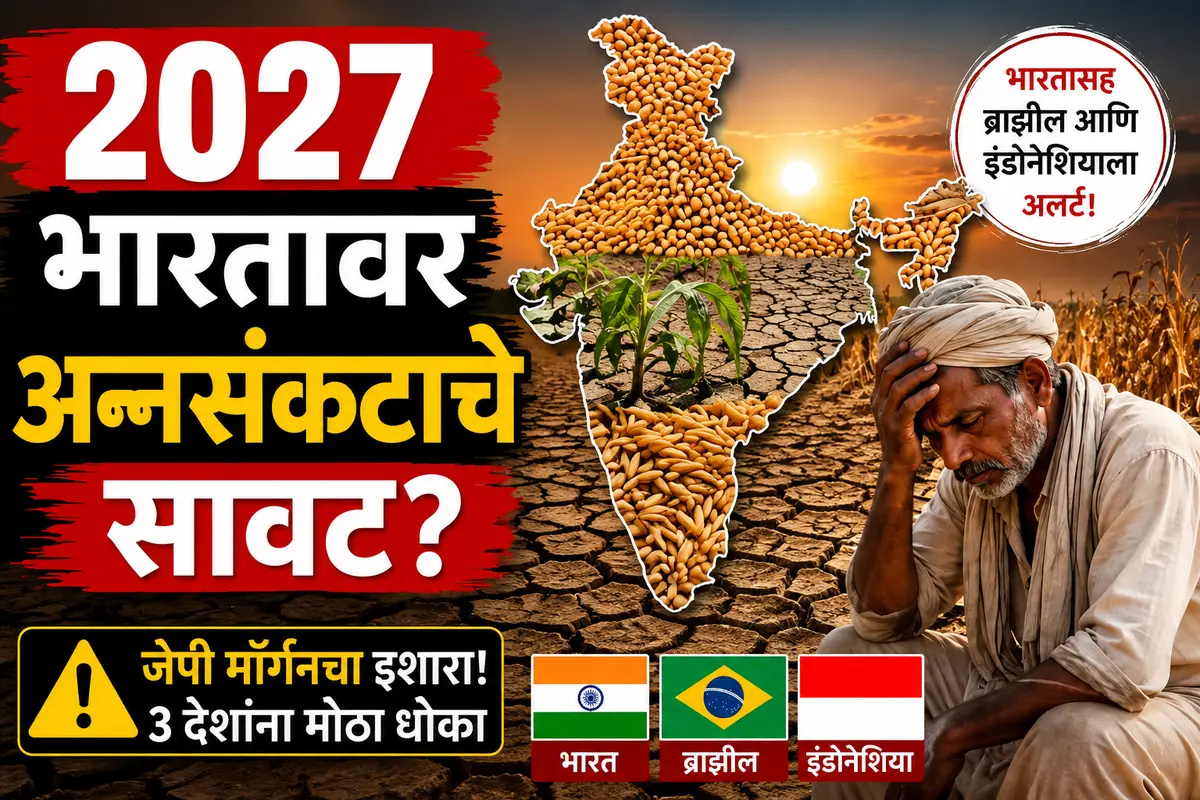
New Delhi: A potential combination of fertilizer supply disruptions, geopolitical tensions and a possible return of El Niño could put fresh pressure on the global food system in 2027, according to a warning highlighted in a recent JPMorgan analysis.
The report points to India, Brazil and Indonesia as countries that could be particularly exposed if weather-related disruptions coincide with higher agricultural input costs and tighter fertilizer supplies.
The warning does not suggest that the world is certain to run out of food in 2027. Instead, it highlights the possibility of higher food prices, weaker crop production and renewed inflationary pressure if several risks occur at the same time.
Global Inflation Could Rise Sharply in 2027
According to the analysis, global inflation could increase significantly during the first half of 2027. The estimate suggests inflation could reach around 5%, compared with approximately 2.8% during the first half of 2026.
Higher food prices could become one of the factors behind this increase. Rising energy costs, expensive agricultural inputs, supply-chain disruptions and unfavorable weather conditions could all add to the cost of producing and transporting food.
For consumers, this could translate into higher prices for essential food products, particularly in emerging economies where households generally spend a larger share of their income on food.
Why India Is Among the Countries Being Closely Watched
India could face significant pressure if a weak or irregular monsoon affects agricultural production.
A large part of India's farming activity remains dependent on rainfall. Any prolonged disruption in the monsoon season could affect the production of crops such as rice, pulses, oilseeds, cotton and sugarcane.
Lower production could tighten domestic supplies and push wholesale prices higher. If the increase continues through the supply chain, consumers could eventually face higher retail food prices.
However, the actual impact would depend on rainfall patterns, domestic crop stocks, government policies, imports and the global availability of agricultural commodities.
Fertilizer Supply Is a Major Risk
Fertilizer availability is another major concern highlighted in the analysis.
The Middle East plays an important role in the global fertilizer market. The region accounts for a substantial share of international urea and ammonia exports, both of which are important for the production of nitrogen-based fertilizers.
Any disruption to production or transportation in the region could therefore affect fertilizer supplies in other parts of the world.
Geopolitical tensions around major shipping routes, including the Strait of Hormuz, could further increase transportation costs and create additional uncertainty for global fertilizer markets.
Higher natural gas prices could also raise fertilizer production costs because natural gas is a key input in the manufacturing of several nitrogen fertilizers.
El Niño Could Add Another Layer of Pressure
Weather could become another major factor in the global food outlook for 2027.
El Niño is associated with changes in rainfall and temperature patterns across different parts of the world. Depending on its strength and location, it can increase the risk of drought in some regions while bringing excessive rainfall and flooding to others.
The JPMorgan analysis suggests that El Niño-related events could reduce crop yields in tropical regions, with average production losses potentially reaching around 3.5%.
Such a decline may appear modest at a global level, but simultaneous production losses across major agricultural regions could have a significant impact on commodity prices.
Which Indian Crops Could Be Affected?
If El Niño contributes to weaker or irregular monsoon rainfall in India, several rain-dependent crops could come under pressure.
Potentially affected crops include:
- Rice
- Pulses
- Oilseeds
- Cotton
- Sugarcane
- Other monsoon-dependent crops
The extent of the impact would depend on the duration and intensity of rainfall disruptions as well as irrigation availability in different regions.
A decline in crop production could reduce market supplies and increase prices, particularly if lower domestic output coincides with tighter international supplies.
Food Crisis Does Not Necessarily Mean Food Shortages
Experts' concerns around 2027 should not automatically be interpreted as a prediction that food will disappear from global markets.
The bigger concern is affordability and price stability.
Even when sufficient food is available globally, higher fertilizer, fuel, transportation and production costs can make agricultural commodities more expensive. For lower- and middle-income households, a sharp increase in food prices can put considerable pressure on household budgets.
This makes food inflation an important economic and social concern even without an absolute shortage of food.
Global Food Stocks Could Provide Some Relief
There are also factors that could limit the severity of the situation.
Existing grain inventories, domestic food reserves and the availability of rice in parts of Asia could provide a buffer against temporary production disruptions.
Government measures such as strategic food reserves, import policies, export restrictions and fertilizer subsidies could also influence how quickly higher global prices reach consumers.
Therefore, the final outcome in 2027 will depend on a combination of weather conditions, fertilizer availability, energy prices, geopolitical developments, crop production and government policy responses.
What It Could Mean for India
For India, the key challenge may not simply be whether enough food is available.
The bigger question could be whether farmers can maintain production while facing higher fertilizer, fuel and other input costs.
If global fertilizer prices rise at the same time that weather conditions become unfavorable, farmers could face higher production expenses and lower yields. That combination could put additional pressure on food inflation.
At the same time, India's domestic food stocks and policy interventions could help absorb part of the shock.
2027 Food Crisis: A Warning, Not a Certainty
The JPMorgan warning highlights a potential risk scenario rather than a guaranteed global food crisis.
If fertilizer supply remains stable, weather conditions are favorable and major agricultural producers maintain strong output, the impact could be considerably smaller.
However, if geopolitical tensions, fertilizer disruptions, higher energy costs and El Niño-related weather disturbances occur simultaneously, food markets could face a much more challenging environment.
For India, Brazil and Indonesia, the coming agricultural seasons will therefore be important indicators of whether these risks develop into a broader global food-price problem.